Your Team

Meet the Team Behind This Service

The leadership of the Plastic Surgery & Aesthetics Medical Center at Chongqing West District Hospital — specialists in aesthetic and reconstructive surgery, skin and laser care, and dermatology — practicing inside a tertiary general hospital. Records, consent and photography are documented by the clinicians themselves, and the medical review of this site is led by the Deputy Director and head of aesthetic surgery.

Specialist Profiles

The four leads, and how each one keeps records

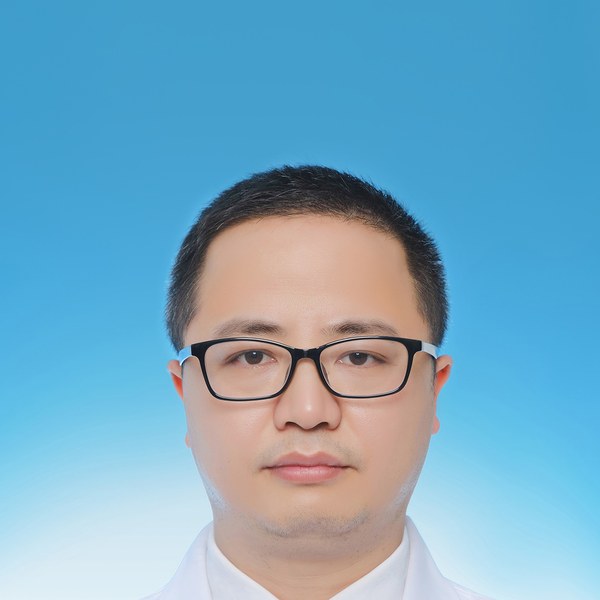
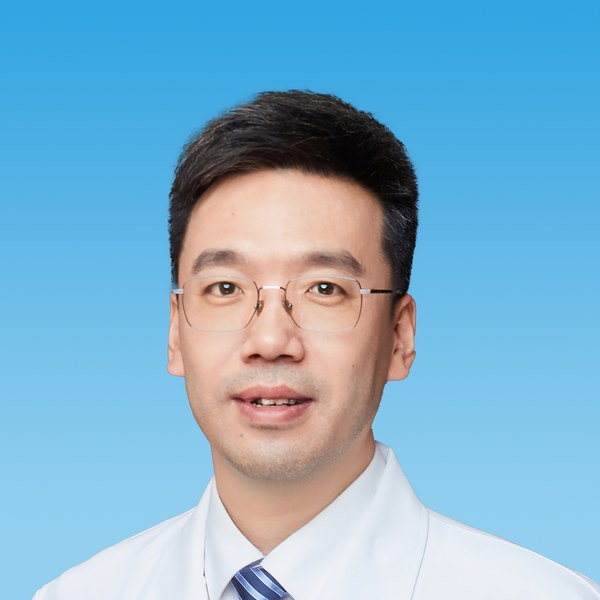
Tongchun Mao, MD

Tongchun Mao, MD (毛彤春)

Deputy Director & Head of Aesthetic Services · Medical Reviewer for This Site · Vice Chief Physician, Licensed Aesthetic Attending

Operative reporting · consent · photographic records

Dr. Tongchun Mao is Deputy Director of the Plastic Surgery & Aesthetics Medical Center at Chongqing West District Hospital and the medical reviewer for the patient information published on this site. A core specialist formerly at the plastic and aesthetic surgery department of Xinqiao Hospital, affiliated with Army Medical University, he has rooted his clinical practice for more than 20 years and personally performs over 700 operations a year.

His practice covers detailed facial surgery, facial rejuvenation and surgical contouring, and body contouring. Records matter in that practice for an unglamorous reason: a result is only judged against what was there before, and a plan is only judged against what was agreed. He writes his own operative reports, photographs to a fixed protocol, and documents consent before a procedure rather than after it.

Clinical focus

  • Consent discussions and their documentation before facial surgery
  • Operative reporting: findings, steps, materials and anesthesia recorded in theatre
  • Photography to a standardised protocol for planning and later review
  • Records that carry a staged plan across separate visits and separate clinicians
  • Implant and device documentation, including batch and serial traceability

Academic roles & achievements

  • Member, Rhinoplasty and Trunk Tumor Groups, Chinese Medical Association Plastic Surgery Branch
  • Member, Chongqing Medical Aesthetics Quality Control Center; Member, Chongqing Medical Accident / Disability Assessment Expert Pools
  • Deputy Chair, Chongqing Shapingba District Medical Aesthetics Committee
  • Published 5 SCI papers, holds 7 national patents, and has participated in 4 research projects
  • Repeatedly named an "Outstanding Young Physician" at Xinqiao Hospital since joining in 2005

The record is what a review is measured against

Nobody remembers accurately what a face looked like two years ago, and nobody remembers exactly what was agreed. A standardised photograph and a written plan are what turn a later conversation from an argument about memory into a comparison of documents.

Shaoliang Wang, MD

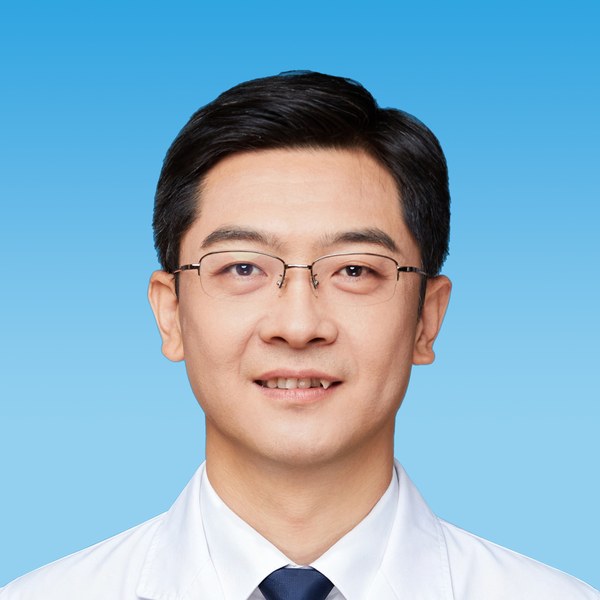
Shaoliang Wang, MD (王韶亮)

Director, Plastic Surgery & Aesthetics Medical Center · Vice Chief Physician, Associate Professor, Doctor of Medicine

Revision records · histology · specimen traceability

Dr. Shaoliang Wang is Director of the Plastic Surgery & Aesthetics Medical Center at Chongqing West District Hospital. He previously served as deputy chief of plastic and aesthetic surgery at Xinqiao Hospital, affiliated with Army Medical University, and brings more than two decades of tertiary-hospital surgical experience to his practice.

Much of his work is revision: correcting operations that began somewhere else. That work depends entirely on records. What was implanted, what was removed, what the laboratory reported, and what the patient was told at the time all change the operation in front of him. Where those documents are missing, the first task is to reconstruct them; where they exist, they are read before anything else.

Clinical focus

  • Documentation supporting revision and reconstructive surgery
  • Specimen traceability from clinic to laboratory, and histology reports filed with the record
  • Consent for procedures whose findings cannot be known in advance
  • Records that support scar and wound management over years rather than visits
  • Record-keeping across departments inside a tertiary general hospital

Academic roles & achievements

  • Member, Craniofacial Surgery Group, Chinese Medical Association Plastic Surgery Branch
  • Deputy Chair, Chongqing Medical Aesthetics & Beauty Committee
  • Standing Committee Member, Chongqing Medical Doctor Association Plastic Surgery Branch
  • Expert Panel, Chongqing Aesthetic Surgery Quality Control Center
  • Developed a new endoscope- and water-jet-assisted technique for removing injected polyacrylamide (Aomingding) breast filler; awarded the Wang Liangneng Cup Military Excellent Scientific Paper Award
  • Principal investigator on an international cooperation sub-project, a Chongqing Natural Science Foundation grant, and a Third Military Medical University technology-transfer project; published 4 SCI papers and holds 8 national invention patents

Records from elsewhere decide the operation

A revision begins with documents. If the original operative report, the implant details or the histology report can be found, the plan can be specific. If they cannot, the honest answer is that part of the operation will be a diagnosis rather than a correction.

Ke He, MD

Ke He, MD (何锞)

Deputy Director & Head of Skin & Laser Aesthetics · Attending Physician, Licensed Aesthetic Attending

Photographic records · image consent · long-term documentation

Dr. Ke He is Deputy Director of the Plastic Surgery & Aesthetics Medical Center and head of its skin and laser aesthetic service at Chongqing West District Hospital. A core specialist formerly at the plastic and aesthetic surgery department of Xinqiao Hospital, affiliated with Army Medical University, she has worked on the clinical front line in skin laser and aesthetic dermatology for more than 20 years, serving over ten thousand patients.

Skin treatment is judged over months, not minutes, and photographs are the record that makes that judgement possible. She photographs to a consistent protocol so that change can actually be seen rather than remembered, keeps those images in the clinical file, and treats consent for images as a separate conversation from consent for treatment.

Clinical focus

  • Photographic records for skin, laser and scar treatment
  • Consent for clinical photography, kept separate from consent for treatment
  • Documenting pigment and scar change across treatment sessions
  • Records that support long-term skin maintenance plans
  • Handling, storage and access control for patient images

Academic roles & achievements

  • Member, Laser Medicine Group, Chinese Medical Association Plastic Surgery Branch
  • Member, Facial Rejuvenation Group, Chinese Medical Association Plastic Surgery Branch
  • Member, Chongqing Plastic Surgery Quality Control Center
  • Published 5 papers, holds 5 national patents, and introduced 2 new clinical techniques

Images are the record that skin work depends on

Pigment and scars change slowly and unevenly, and memory smooths over exactly the differences that matter. A photograph taken the same way each time is the only reliable way to tell a real change from a hopeful impression.

Yongbo Jia, MD

Yongbo Jia, MD (贾勇波)

Deputy Director & Head of Dermatology · Vice Chief Physician, Licensed Aesthetic Attending

Diagnostic reporting · specimen records · confidentiality

Dr. Yongbo Jia is Deputy Director of the Plastic Surgery & Aesthetics Medical Center and head of its dermatology service at Chongqing West District Hospital. A vice chief physician and licensed aesthetic attending, he graduated from Chengdu University of Traditional Chinese Medicine and trained in dermatology at the Institute of Dermatology, Chinese Academy of Medical Sciences, and at Chongqing Hospital of Traditional Chinese Medicine.

Dermatology is a specialty of diagnosis, and a diagnosis is only as good as its documentation: what the lesion looked like, what was removed, and what the laboratory reported. He keeps the record of a specimen continuous from clinic to laboratory and back, so that the report is never separated from the thing it describes, and consults in the ordinary confidentiality that any patient is entitled to expect.

Clinical focus

  • Diagnostic records and reporting for skin conditions
  • Documentation and consent for lesion excision and histology
  • Records supporting preoperative skin assessment
  • Confidentiality in dermatology consultations
  • Specimen traceability from clinic to laboratory and back

Academic roles & achievements

  • Member, Jiusan Society
  • Member, Chongqing Integrative Medicine Skin & Beauty Committee
  • Advanced training at the Institute of Dermatology (Chinese Academy of Medical Sciences) and Chongqing Hospital of Traditional Chinese Medicine

A diagnosis is only as good as its documentation

Most disagreements about a skin lesion trace back to a record that did not say enough: what was seen, what was removed, and what the laboratory found. Writing that down properly is not administration; it is the diagnosis continuing to exist after the clinic has ended.

You are entitled to ask

Contact the medical records team to ask what is held about you, request a copy, ask who has accessed your file, or raise a concern about how your information has been handled. We will set out the process, what you will receive, and what the applicable local regulation requires of us — in plain language, before you commit to anything.

Contact the Records Team